
January 22, 2026
Your Ultimate Standard Operating Procedure Guide
Build an effective standard operating procedure guide to streamline workflows, boost efficiency, and scale your business with proven, actionable steps.
A standard operating procedure guide is your company’s playbook for success—it's not a restrictive rulebook. It's how you turn inconsistent, tribal knowledge into a reliable system. A system that ensures every critical task gets done right, every single time. That consistency is the bedrock of scaling your business.
Why Your Business Needs a Playbook, Not a Rulebook
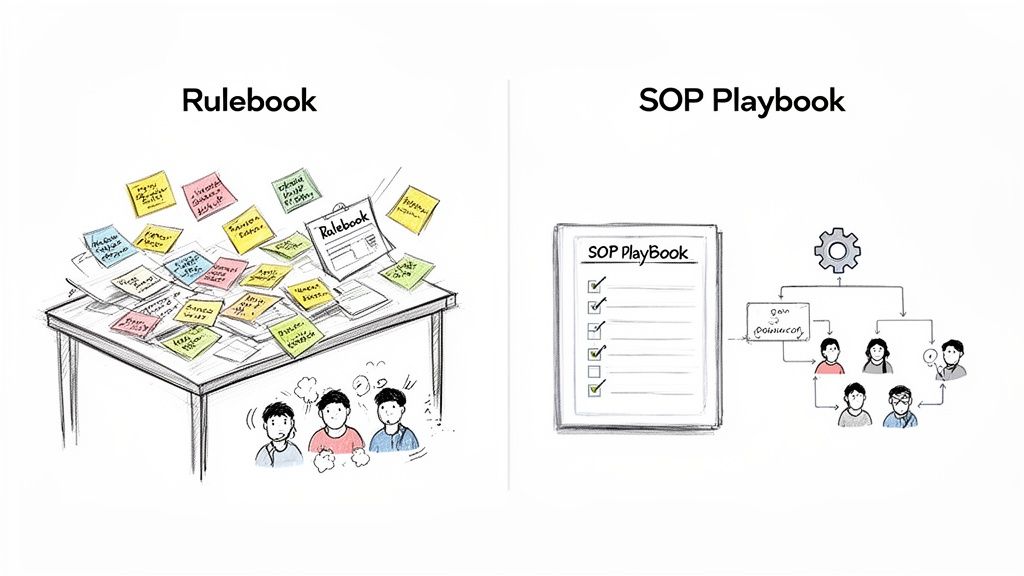
Does your team spend more time asking how to do something than actually doing it? Without clear processes, most businesses run on a shaky foundation of "tribal knowledge"—unwritten rules and workflows trapped inside the heads of a few key people. This isn't just inefficient; it's a direct threat to your growth.
When a seasoned team member leaves, their expertise walks right out the door with them. Everyone else is left to reinvent the wheel, leading to a frustrating cycle of preventable errors, inconsistent work, and a painful onboarding experience for new hires.
Moving from Chaos to Consistency
Think of a standard operating procedure (SOP) as the playbook for a championship team. Every player knows their role, the plays, and the exact steps to execute for a win. This playbook doesn't stifle creativity. It provides a reliable framework that frees up mental energy to focus on strategy and problem-solving, not basic execution.
For businesses, this translates to real, tangible benefits:
Reduced Training Time: New team members become productive way faster when they have a clear, documented path to follow instead of relying on shoulder taps and guesswork.
Improved Quality Control: When everyone follows the same high-quality process, the final output—whether it's a product, service, or client report—is consistently excellent.
Enhanced Scalability: Documented processes are the blueprint for growth. You can't scale what you can't replicate, and SOPs make replication predictable and reliable.
An SOP is more than just a document; it's a commitment to excellence. It signals to your team and clients that you value precision, consistency, and a systematic approach to getting quality results.
The Growing Demand for Documented Processes
The shift toward structured operations isn't just a trend; it's a major business movement. The global market for SOP management software was valued at around USD 1.53 billion in 2023 and is on track to hit USD 4.0 billion by 2031. That’s not a small jump.
You can read more about the growth of the SOP management market and its impact. This data shows just how much modern companies, especially remote and distributed teams, depend on documented procedures to stay cohesive and in control. By creating your own standard operating procedure guide, you're building the operational infrastructure your business needs for sustainable success.
The Anatomy of a High-Impact SOP
What separates an SOP that gathers digital dust from one that becomes a team’s go-to resource? The difference isn't length or complexity—it's anatomy. A high-impact SOP isn’t just a to-do list; it’s a thoughtfully built guide where every single piece serves a purpose.
Think of it like building with LEGOs. You can have a random pile of bricks, or you can have a structured set with a clear plan. Great SOPs follow a plan, making sure every piece connects logically to create a tool people actually trust and use.
The Foundational Components
Every SOP worth its salt is built on a few core elements. These are the non-negotiables that provide context, clarity, and accountability.
Skipping them is like trying to navigate a new city without a map. You might get there eventually, but it’ll be confusing, inefficient, and you'll probably get lost a few times.
These are the pieces you absolutely need:
A Clear and Searchable Title: The title should be direct and use words your team would actually search for. Think "How to Onboard a New Client in Asana" instead of a vague "Client Process."
A Unique Identifier: An SOP ID (like HR-003-V2) might seem a little formal, but it's crucial for version control. It stops people from accidentally using an outdated guide from six months ago.
A Purpose Statement: This is the "why." A quick sentence or two explaining the goal of the procedure and why it matters can dramatically boost team buy-in.
Defined Roles and Responsibilities: Spell out exactly who is responsible for each part of the process. This kills the guesswork and creates real accountability.
The most powerful SOPs are built for clarity, not complexity. Their primary goal is to make the right way to do a task the easiest way to do it, eliminating ambiguity at every step.
When you include these components, you’re not just telling your team what to do. You’re giving them the full picture: why it matters, who does what, and which version is the right one. This is what turns a simple list into a reliable source of truth.
Choosing the Right SOP Format
You wouldn't use a hammer to drive a screw, so why force every process into the same document format? The structure of your SOP should match the task at hand. A simple checklist is perfect for routine tasks, but complex troubleshooting needs something more dynamic.
Getting this right is key. If the format is a poor fit for the task, even the most well-written procedure will get ignored.
To help you decide, here’s a quick comparison of the most common formats.
Choosing the Right SOP Format for Your Needs
A comparison of common SOP formats to help you decide which structure best suits your specific process and team.
SOP Format | Best For | Key Advantage | Example Use Case |
|---|---|---|---|
Simple Checklist | Routine, linear tasks that need verification but little explanation. | Ensures no steps are missed and provides clear accountability. | Completing daily server backups or closing out a project ticket. |
Step-by-Step Guide | Detailed processes that need more explanation than a simple list. | Gives clear, sequential instructions with room for notes or visuals. | Publishing a new blog post or setting up a client's software account. |
Flowchart | Processes with multiple decision points and variable outcomes. | Visually maps out complex workflows and guides users through "if-then" scenarios. | Troubleshooting a customer support ticket or handling an escalation process. |
Ultimately, the best format is the one that makes it easiest for your team to get the job done right. By matching the structure to the task's complexity, you create a guide that’s not just informative but genuinely helpful—empowering your team to work with confidence and precision every time.
How to Create Your First SOP Step-by-Step
Moving from theory to action is where an SOP really proves its worth. Creating your first one can feel like a huge task, but it’s actually pretty straightforward when you break it down into manageable chunks. This isn’t about writing a perfect document on the first try. It's about capturing a process in a way that's clear, simple, and genuinely useful for your team.
The goal is to get that process out of someone's head—that "tribal knowledge"—and turn it into a reliable, documented asset anyone can follow. This step-by-step approach makes sure you get the right information from the right people and structure it so it actually gets used.
Phase 1: Define the Process and Gather Information
Before you write a single word, you need a clear target. The first step is picking a process to document. A great place to start is a task that’s done frequently, is critical to your operations, or just causes a lot of confusion. Steer clear of overly complex, multi-departmental workflows for your first attempt.
Once you’ve picked your process, the real work begins: gathering information. This is a team sport, not a solo mission.
Identify the Experts: Find the people who do this task every single day. Their hands-on knowledge is gold. They know the shortcuts, the weird quirks, and the common traps that formal documentation often misses.
Observe the Process in Action: Go watch them do it. Take notes. Ask questions to understand the "why" behind each action. This helps uncover all the little things that experts do automatically and might forget to mention.
Collect Existing Resources: Grab any checklists, informal notes, or related docs that already exist. This can be a great foundation and saves you from reinventing the wheel.
At its core, every solid SOP needs just three things.
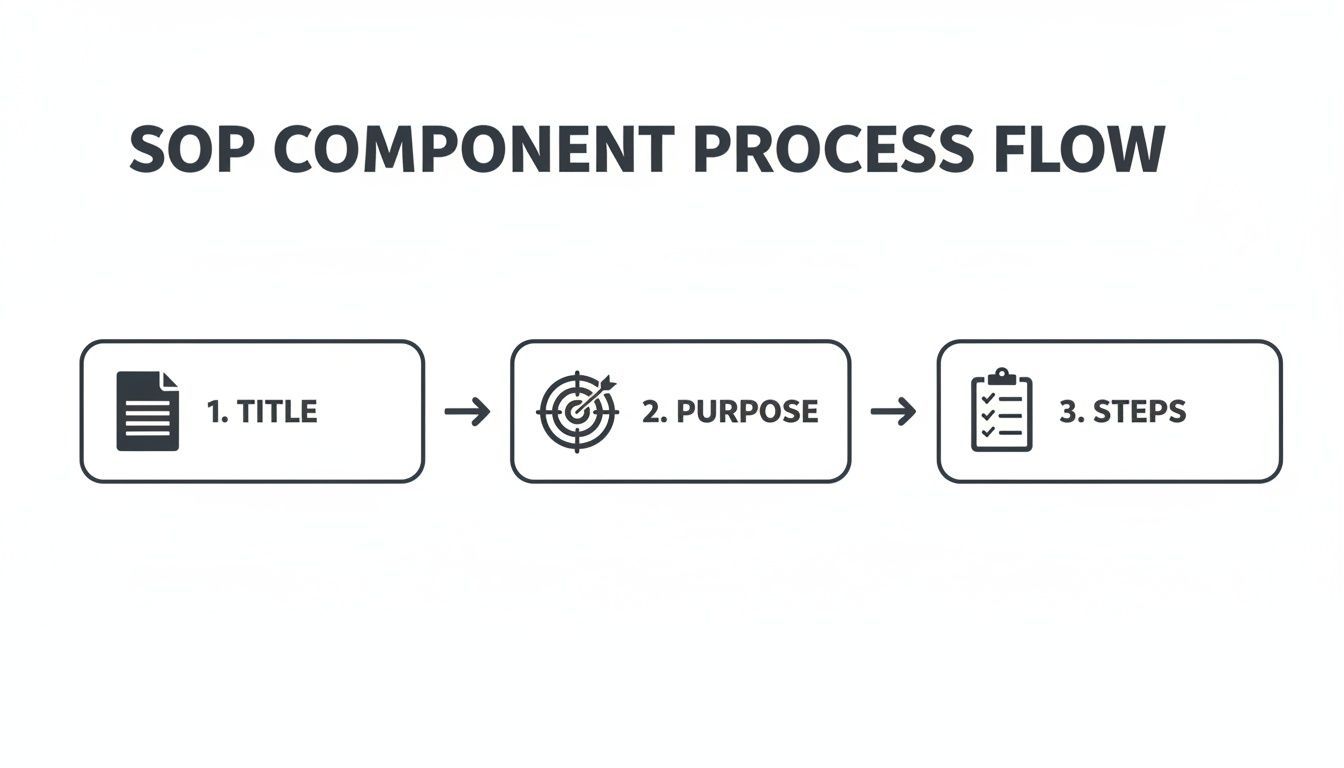
This simple flow reminds us that every procedure needs a clear title, a stated purpose for context, and actionable steps to get the work done.
Phase 2: Draft the Procedure with Clarity
With all your info collected, it’s time to start writing. The key here is clarity over formality. Write for the newest person on your team, not the expert who already knows it all.
An effective SOP should feel like a patient expert is guiding you over your shoulder. It anticipates questions, clarifies ambiguity, and gives the user confidence to proceed without hesitation.
Use these practices to make your draft easy to follow:
Start with an Action Verb: Begin each step with a strong verb like "Open," "Click," "Enter," or "Verify." This makes your instructions direct and impossible to misinterpret.
Keep Sentences Short and Simple: Avoid long, rambling sentences. Each step should focus on one single, distinct action.
Write in the Active Voice: An active voice ("You upload the file") is much more direct and easier to understand than a passive one ("The file is uploaded by you").
Define Jargon and Acronyms: Don't assume everyone knows what your internal acronyms mean. Define them the first time you use them.
This first draft is your "minimum viable procedure." It doesn't need to be perfect, but it should accurately capture the sequence of steps needed to complete the task.
Phase 3: Enhance with Visuals and Refine
A wall of text is the fastest way to get your SOP ignored. Visuals aren't just for decoration; they are critical communication tools, especially for software-based tasks. In fact, studies show that instructions with illustrations perform 323% better than those without.
Break up the text and make your instructions crystal clear with visuals:
Screenshots with Annotations: For any software workflow, use screenshots for each key step. Use arrows, boxes, or callouts to show exactly where to click or what to type.
Short Screen Recordings or GIFs: For actions that are hard to describe with a static image, a quick video or GIF can provide incredible clarity.
Flowcharts for Decision Points: If your process has any "if-then" logic, a simple flowchart is much easier to follow than a paragraph of text.
After adding visuals, send the draft back to your subject matter experts for a review. Ask them to follow the steps exactly as written. This testing phase is crucial for catching errors, finding missing steps, and making sure the SOP actually works in the real world. Use their feedback to make your final tweaks, and you’ll have a document that’s accurate, practical, and ready for your team.
Driving Team Adoption and Implementation
Creating a brilliant standard operating procedure guide is only half the battle. A perfect SOP that nobody uses is just a well-formatted failure.
The real challenge—and where the value is—is getting your team to actually use these documents until they become muscle memory. This is fundamentally about people, not just procedures.
You have to shift the team’s mindset from seeing SOPs as a bureaucratic hurdle to viewing them as a helpful tool that makes their jobs easier. Success hinges on a thoughtful rollout, good training, and making your procedures incredibly easy to find.
Communicating the Real Value
The first step is answering the "What's in it for me?" question for every single person on your team. If they see SOPs as a top-down mandate for micromanagement, they’ll resist. You have to frame it around benefits they can feel directly.
Focus your communication on tangible improvements:
Less Guesswork: Highlight how SOPs stop them from having to constantly ask for help. They can find answers and act confidently on their own.
Faster Onboarding: For new hires, SOPs are a lifeline that helps them feel productive and part of the team much faster.
Fairer Workloads: Emphasize that standardized processes mean work is done consistently, which prevents a few experts from becoming a constant bottleneck.
Professional Growth: Position process mastery as a key skill. Show that following SOPs leads to higher-quality work and opens up opportunities for advancement.
When you focus on these personal wins, you change the perception of SOPs from a chore into a tool for their own success.
The goal of implementation isn't just compliance; it's genuine buy-in. When your team understands that SOPs are designed to help them succeed, they become advocates for the process, not just followers of it.
Building an Accessible SOP Library
Even with perfect buy-in, SOPs will fail if they’re hard to find. If it takes longer to find the procedure than to just ask a coworker, your team will always choose the path of least resistance.
This is why a centralized, intuitive SOP library is non-negotiable. It needs to be the single source of truth for all procedures.
Whether you use a dedicated knowledge base, a shared drive with a clean folder structure, or a specialized tool, the principles are the same: it must be searchable, organized, and available to everyone.
This approach is a key reason North America's SOP management market is so dominant. In 2024, the region commanded over 40% of the global market, driven by the widespread adoption of frameworks that demand accessible documentation. You can discover more insights about the global SOP management market and its trends.
Running Training That Actually Works
Training is your chance to bring your standard operating procedure guide to life. Passive, lecture-style sessions just won't cut it. Your training has to be active, hands-on, and directly relevant to the team's daily work.
Instead of just presenting the document, run interactive workshops where team members use the SOP to complete a real-world task. This practical application helps them understand the flow, spot potential confusion, and see the value firsthand. If you're documenting a software workflow, our article on how to create a step-by-step guide can be helpful for structuring your training materials.
Finally, establish a feedback loop from day one. Encourage your team to ask questions and suggest improvements during and after training. This collaborative approach not only makes your SOPs better but also reinforces that these are living documents owned by the team—not just by management.
Keeping Your SOPs Relevant and Effective
Getting a standard operating procedure guide written is a huge milestone, but it’s definitely not the finish line. The most common mistake businesses make is treating their SOPs like static files—written once, then left to gather dust in a shared drive. But your business is always evolving, and your procedures have to keep pace.
Without a system for regular updates, even the most carefully written SOPs quickly become useless. An outdated procedure isn't just unhelpful; it's actively harmful. It can cause confusion, create safety risks, and completely erode the trust your team has in your documentation.
Establishing a Simple Review Cadence
The fix is to build a simple, sustainable lifecycle for your SOPs. This isn't about adding more bureaucracy. It’s about creating a lightweight system to make sure your guides stay a reliable source of truth.
Start by assigning an owner to every SOP. This is the person responsible for its accuracy and for making sure it gets reviewed. Next, set up a review schedule based on how often the process changes.
Quarterly Reviews: Perfect for dynamic processes tied to software that updates a lot, client-facing services, or anything involving shifting regulations.
Annual Reviews: Great for stable, internal admin work like expense reporting or basic HR tasks that rarely change.
The trick is to schedule these reviews ahead of time and automate the reminders. This turns maintenance from an annoying afterthought into a proactive, manageable habit.
Tying Updates to Real-World Triggers
Scheduled reviews are essential, but you also have to be ready to update SOPs when real-world events happen. Your team on the ground is your best source of information here. Give them a clear, simple way to flag a procedure when it no longer matches reality.
Other key triggers for an immediate SOP update include:
New Software or Tool Rollouts: Any change in the tools your team uses will instantly make old guides obsolete.
Shifts in Team Structure: When roles or responsibilities change, the related procedures must be updated to show the new workflow.
Post-Project Retrospectives: Use the lessons you learn from projects to make your processes better.
Keeping SOPs current can feel like a chore, but there are efficient ways to handle it. To learn more, check out our guide on how to keep SOPs up to date without a meeting, which is packed with practical tips for asynchronous collaboration.
Your SOP library should be a living system, not a museum of old processes. Each update, driven by team feedback or changing business needs, makes your operational playbook stronger, smarter, and more effective.
To make sure your SOPs stay useful and grow with your business, it helps to implement strong knowledge management best practices. This approach helps facilitate continuous improvement and makes sure everyone has easy access to the right procedures, turning your documentation into a real strategic asset.
Practical SOP Examples for Key Business Functions
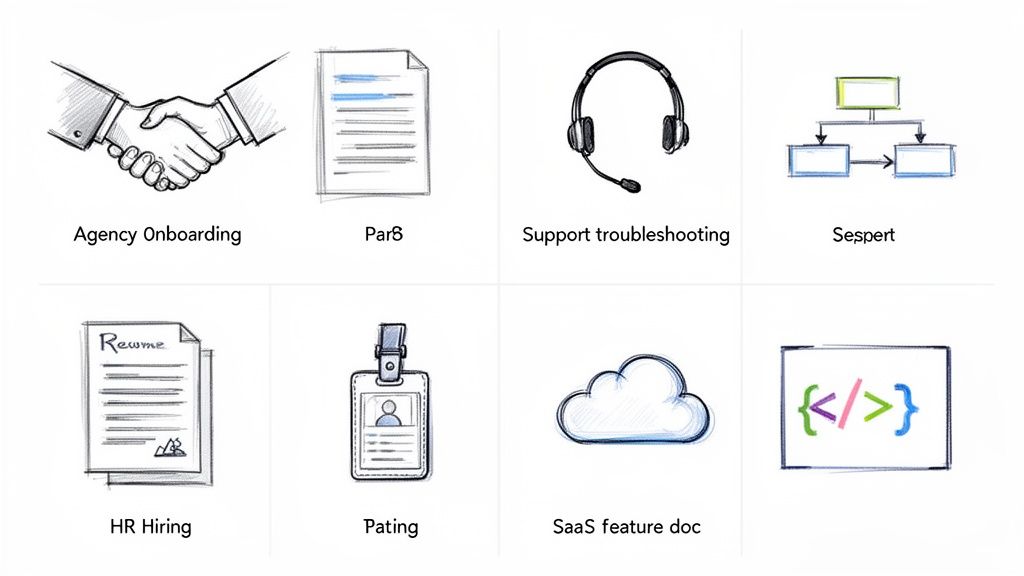
Theory is great, but seeing a standard operating procedure in action is what really makes the idea click. The true power of SOPs is in their flexibility—they bring order and consistency to just about any part of the business, from how you treat clients to how you handle internal HR tasks.
To make this concrete, let's walk through how a few different departments might put these ideas to work. The tone and structure will change for each one, but the goal is always the same: create a clear, actionable playbook that kills the guesswork.
Agency Client Onboarding
For any agency, the first 90 days set the entire tone for a new client relationship. A solid client onboarding SOP ensures nothing slips through the cracks and every single client gets the same high-touch kickoff experience.
This kind of SOP is usually a mix of step-by-step instructions and simple checklists.
Step 1: Internal Project Kickoff: Assign the project manager, schedule the internal briefing, and spin up the client’s project space in your go-to management tool.
Step 2: Official Client Welcome: Send the welcome package, schedule the official kickoff call, and give the client access to their shared portal.
Step 3: Information Gathering: Use a standard questionnaire to collect all necessary brand assets, account logins, and stakeholder contacts.
Step 4: Set First Deliverable Date: Confirm the date for the first major milestone and clearly outline the review process.
Following this script guarantees a smooth, professional start, which has a direct line to client retention and satisfaction.
HR New Hire Processing
Human Resources teams are buried in administrative tasks where a single mistake can cause major headaches. An SOP for processing a new hire ensures legal compliance and, just as importantly, creates a positive, organized first impression for the new employee.
A well-structured SOP is the engine of a repeatable, scalable process. It transforms a complex series of individual tasks into a cohesive system that delivers predictable, high-quality outcomes every time.
In this context, a good employee training template guide can be a huge help in building out consistent and effective learning programs for those new hires.
This SOP is often a hierarchical checklist:
Pre-Arrival Phase
Send the official offer letter and employment contract.
Kick off the background check process.
Coordinate with IT to get all necessary hardware ready.
Day One Onboarding
Complete I-9 and W-4 forms.
Provide an overview of key company policies.
Issue laptop, ID badge, and system access.
SaaS Product Feature Documentation
For a SaaS company, documentation isn't just helpful—it’s part of the product. An SOP for documenting a new feature ensures that all guides are consistent, easy to follow, and published right when the feature goes live. This procedure would blend clear instructions with a quality assurance checklist.
Drafting: Write the initial how-to guide using the company’s established voice and tone.
Visuals: Create annotated screenshots and record a short GIF for each key action.
Review: Submit the draft to an engineer for a technical accuracy review.
Publishing: Push the guide live to the knowledge base and link it from the "What's New" section inside the app.
SOP Application Across Key Departments
To really see the versatility of SOPs, it helps to look at how different teams can use them to solve their unique problems. The table below gives a quick overview of how SOPs can be put to work across a typical organization.
Department | Primary Goal | Common SOP Example | Key Performance Indicator (KPI) |
|---|---|---|---|
Sales | Standardize the deal-closing process | "How to Process a New Contract" | Time to Close (Deal Velocity) |
Marketing | Ensure brand consistency in content | "Publishing a New Blog Post" | Content Production Rate |
Customer Support | Resolve common issues quickly & accurately | "Handling a Refund Request" | First Contact Resolution (FCR) Rate |
IT/Operations | Securely manage user access | "Employee Offboarding Checklist" | Time to De-provision Access |
Each of these examples shows how a simple, documented process can drive specific business outcomes, from faster sales cycles to more secure operations.
These examples are just the tip of the iceberg. To get a better feel for different layouts and formats, you can check out these complete standard operating procedure examples for a range of industries. Each one shows how a tailored SOP drives efficiency and quality, no matter the department.
Frequently Asked Questions About SOPs
Even with a solid game plan, you're bound to run into a few questions when you create your first standard operating procedure. It’s totally normal. Getting these cleared up from the start helps make sure your documentation actually gets used.
Here are the answers to the questions we hear most often.
How Often Should We Review and Update Our SOPs?
This is a great question, and the honest answer is: it depends.
For processes that change a lot—think software workflows or anything tied to regulations—you should probably look at them quarterly. At the very least, review them after any major update. For more stable, administrative tasks, an annual review is usually enough.
The real key is to schedule these reviews and assign an owner. That way, nothing falls through the cracks. And if you get feedback from the team that a guide is out of date or just plain wrong, don't wait for the scheduled review. Fix it right away.
What Is the Biggest Mistake to Avoid When Creating SOPs?
The single biggest pitfall is creating SOPs in a vacuum. It happens all the time: a manager or team lead locks themselves in a room and writes a document without talking to the people who actually do the work.
This almost always results in a guide that’s disconnected from reality. It might look good on paper, but the team will ignore it because it doesn't match how things actually get done.
The best SOPs are collaborative. They’re built with direct input from the people on the front lines. This one step is the difference between a document that’s practical and helpful, and one that just collects dust.
Is My Business Too Small for SOPs?
Nope. No business is too small for SOPs.
In fact, getting clear processes down on paper early on is exactly what allows a small business to grow without everything turning to chaos. For startups and small teams, SOPs mean new hires can get up to speed quickly and contribute faster.
Don’t think of it as documenting your present. Think of it as building the foundation for your future. You’re setting a standard for quality from day one.
How Do We Measure the ROI of Our SOPs?
This is where things get interesting. You can absolutely measure the value of good SOPs by tracking a few key metrics before and after you put them in place. Look for real improvements in areas that hit your bottom line.
Quantitative Wins: Think about things like a reduction in onboarding time for new hires, a lower error rate on routine tasks, fewer support tickets, and just plain faster task completion.
Qualitative Wins: These are just as important. Look for signs of higher team morale, increased autonomy (people asking fewer questions), and more consistent, positive client feedback.
When you can connect those gains to actual cost savings or increased capacity, you’ve built a powerful case for the return on your investment.
Ready to stop relying on tribal knowledge and start building a playbook that scales? With Build a Guide, you can turn screen recordings into interactive, step-by-step guides in minutes. Ditch the static documents and create a living SOP library your team will actually use. Start building your first guide today.