
February 6, 2026
What Is Tribal Knowledge And How To Document It
What is tribal knowledge and why is it a risk? Learn to capture undocumented expertise and turn it into reliable SOPs that protect and scale your business.
Picture this: your best employee, the one who just knows how to keep your biggest client happy, walks out the door for the last time. All those unwritten rules, clever workarounds, and hard-won insights? They just walked out, too.
That’s the high cost of tribal knowledge—the collective wisdom and informal processes that live inside the heads of a few key people. It’s like a restaurant’s secret recipe that only one chef has memorized. If that chef leaves, the signature dish is gone for good.
The Hidden Risk In Your Team's Expertise

So, what exactly is tribal knowledge in a business? It's all the practical, undocumented information people pick up simply by doing the job. You won't find this stuff in any official manual.
It's the veteran engineer who can diagnose a machine’s problem just from the sound it makes. It's the sales rep who knows exactly which buttons not to push with a difficult client because they’ve learned the hard way. This is the intuitive know-how that keeps things running smoothly day-to-day.
But this hidden expertise is a double-edged sword. While it’s incredibly valuable, it makes you dangerously dependent on specific people. When they’re on vacation, out sick, or quit, that knowledge vanishes, leaving everyone else scrambling to fill the gaps.
The Real Cost of Knowledge Loss
This isn't just a hypothetical problem—it has a real financial impact. A study by PricewaterhouseCoopers found that 45% of organizations face significant operational disruptions when employees leave and take their knowledge with them. In manufacturing, that number jumps to a staggering 52%.
In the U.S. alone, the cost of employee turnover runs into the hundreds of billions each year, and a huge chunk of that is tied directly to the loss of this irreplaceable know-how. You can find more details on these findings over on Wikipedia.
In the agentic world of AI and automation, if knowledge isn't explicitly documented in a policy or process, it effectively doesn't exist. Systems can't operate on lore or Slack threads—they need clear, encoded instructions to function safely and effectively.
An Asset and a Liability
The great paradox of tribal knowledge is that its biggest strength—being concentrated in your most experienced people—is also its greatest weakness. Without a system to capture and share this expertise, you're constantly one resignation away from losing your most valuable operational assets.
To put it simply, here’s a breakdown of the problem and the path forward.
Tribal Knowledge At A Glance
Characteristic | Associated Risk | The Solution |
|---|---|---|
Undocumented | Knowledge is lost when employees leave, leading to operational gaps. | Implement a system for creating living Standard Operating Procedures (SOPs). |
Experience-Based | New hires face a steep, slow learning curve with inconsistent training. | Capture expert workflows visually to create standardized, repeatable training guides. |
Person-Dependent | Operations grind to a halt when a key "knowledge keeper" is unavailable. | Democratize expertise by making it accessible to the entire team in a central hub. |
The solution isn't to stop relying on experts, but to build a system that turns their individual brilliance into a reliable, shared company asset.
How To Spot Tribal Knowledge In Your Business
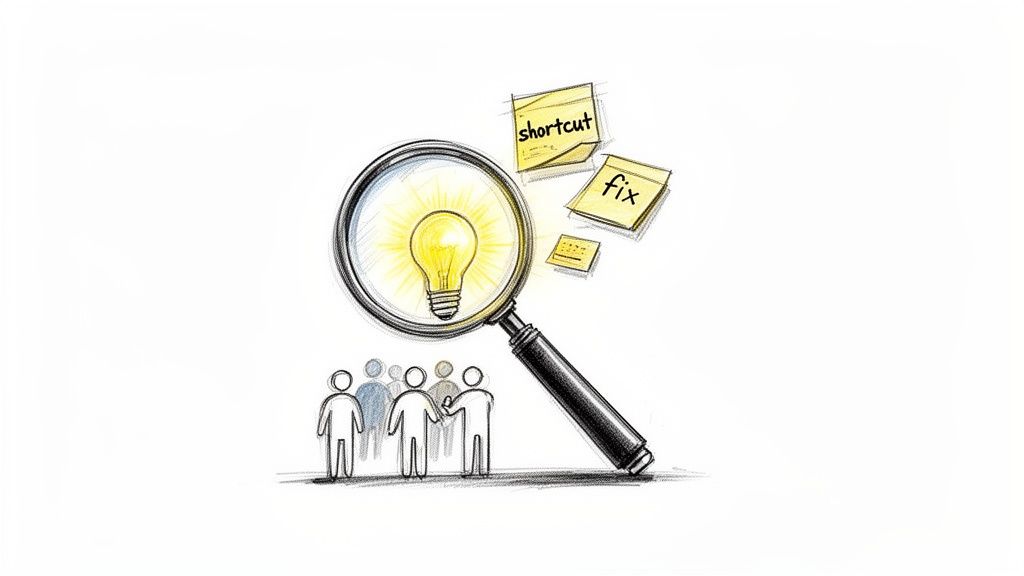
Tribal knowledge isn’t some abstract management theory. It's the real, unwritten stuff that makes your business actually work—and it often stays invisible until the day it suddenly isn't there.
This is the “secret sauce” that lives inside the heads of your most tenured people, not in a shared system anyone can access.
The most obvious sign? Listen for phrases like, “Oh, for that, you need to talk to Sarah,” or “Just ask Mike, he’s the only one who knows how to fix that.” These are bright red flags. They tell you a process depends on a person, not a system.
Another dead giveaway is the “magic fix.” This is when a recurring problem stumps everyone, but one specific person has a unique, undocumented solution that works every time. Their skill is a huge asset, but the fact that it's unwritten creates a major operational risk.
Common Hiding Spots Across Departments
This unwritten expertise isn’t just in one corner of the business. It’s everywhere, often disguised as simple experience or efficiency. Spotting these patterns is the first real step toward building a more resilient company.
Here are a few department-specific examples of what tribal knowledge looks like in the wild:
Sales: An account executive has an almost magical ability to close tough deals. Her secret isn’t magic—it’s a specific follow-up sequence she perfected over years. The exact timing of emails, the right questions for calls... it all exists only in her head and personal notes.
Operations: The ops manager has a shortcut for onboarding new hires that cuts the time in half. It’s a specific order of setting up accounts that bypasses the slower, official procedure. When she’s on vacation, onboarding grinds to a halt because no one else knows the trick.
Customer Support: A senior support agent knows a weird “back-end reset” that instantly solves a frustrating software bug. Junior agents, following the official knowledge base, spend hours on troubleshooting calls for the same issue, creating wildly inconsistent customer experiences.
The problem isn’t that your experts are hoarding information. It’s that your system for capturing their hard-won insights is broken or doesn't exist. Their shortcuts are assets that need to be shared.
Uncovering The Unwritten Rules
To start finding these knowledge silos, just pay attention to the informal workarounds and “unwritten rules” your team uses to get things done. These are often your most valuable processes, but they’re also your most fragile.
Ask yourself these questions to pinpoint where the risks are:
Who are the "go-to" people? Make a mental list of the individuals everyone turns to when they get stuck on a specific task.
What happens when they're away? Do certain workflows slow down or stop completely when a key person is out of office?
Are there inconsistencies in output? Does the quality or speed of a process depend entirely on who’s doing it?
Every “yes” here points directly to a piece of critical tribal knowledge. Each one is an opportunity to capture that individual expertise and turn it into a reliable, repeatable process anyone on the team can follow.
This is how you turn a person’s unique skill into a powerful, scalable company asset.
The True Cost Of Undocumented Processes
Relying on unwritten rules and informal processes isn’t just a minor inconvenience; it’s a silent tax on your company’s efficiency, consistency, and growth. Once you stop just identifying tribal knowledge and start measuring its impact, the real costs become alarmingly clear. These aren't abstract risks—they're a tangible drag on your bottom line.
Each piece of undocumented expertise creates a single point of failure. Think about that operational bottleneck that pops up every single time a key person goes on vacation. Projects stall, deadlines get pushed, and team productivity grinds to a halt while everyone waits for the one person who holds the "secret" to get back online.
This is the classic "bus factor"—a grim but effective way of asking how many people need to get hit by a bus before a project or process completely fails.
When knowledge is tied to a single person, you have a bus factor of one.
Crippling Inconsistencies And Slow Growth
This dependency doesn’t just mess with internal operations; it directly hits your customers. When only a few support agents know the “magic fix” for a common bug, customer service becomes a lottery. One customer gets a quick, effortless solution, while another suffers through a long, frustrating call, chipping away at your brand’s reputation.
The same inconsistency bleeds into training and onboarding. Instead of following a clear, documented path, new hires are forced to shadow multiple people, often getting conflicting advice. This leads to painfully slow ramp-up times, drains your senior staff who have to act as full-time mentors, and ultimately means new employees never reach their full potential. The entire system is inefficient and impossible to scale.
The Financial Drain of Knowledge Silos
The financial and operational costs here are very real. A 2023 Forrester report found that a staggering 55% of organizations struggle with siloed knowledge. This isn't just an internal headache; these "knowledge hoarders" were found to slow down cross-team projects by 33%.
U.S. Bureau of Labor statistics show this problem directly stunts growth, revealing that small and mid-sized businesses with a high dependency on tribal knowledge grow 12% slower than peers who have invested in documentation. In places with strict regulations like the EU's GDPR, undocumented practices can also lead to massive compliance failures, with average fines hitting €20 million. You can find a thorough analysis of tribal knowledge with more details.
When critical operational knowledge is undocumented, your business isn't running on a system; it's running on a series of individual gambles. Each departure, vacation, or sick day is a roll of the dice that risks your productivity and customer satisfaction.
Ultimately, failing to convert tribal knowledge into documented Standard Operating Procedures (SOPs) is a strategic error. To see just how different the outcomes are, let's compare the two approaches side-by-side.
Tribal Knowledge vs Documented SOPs A Comparative Analysis
This table breaks down the real-world difference between a business running on memory and one running on a system. The contrast in outcomes across key business areas is stark.
Business Area | Impact of Tribal Knowledge | Benefit of Living SOPs |
|---|---|---|
Employee Onboarding | Slow, inconsistent, and heavily reliant on senior staff's availability. | Fast, standardized, and self-paced, freeing up senior team members for high-value work. |
Customer Experience | Inconsistent service quality that depends entirely on which employee is handling the request. | Uniformly excellent service delivered consistently across the entire team, building brand trust. |
Scalability | Growth is limited by the number of "experts" you have, creating operational bottlenecks. | Operations can scale smoothly and efficiently because processes are repeatable and teachable. |
Operational Risk | High "bus factor" where the absence of one person can halt critical workflows entirely. | Low operational risk because essential knowledge is a shared, accessible company asset. |
Moving from a fragile system built on individual memory to a robust one built on shared, living documents isn't just about managing risk. It’s about unlocking your team’s full potential and building a resilient foundation for whatever comes next.
A Step By Step Plan To Capture Tribal Knowledge
Knowing the risks of undocumented knowledge is one thing. Actually solving the problem is something else entirely. The good news is, turning that fragile expertise into a solid company asset doesn't require some massive, disruptive project. It's a clear, repeatable process that gets your team sharing what they know.
This five-step plan is built for action. Follow it, and you can start building a resilient knowledge base today—one that ensures your critical processes are standardized, scalable, and safe.
Step 1 Pinpoint Your Knowledge Keepers and Critical Workflows
Before you can document a single thing, you need to know two things: who holds the knowledge and which processes are most at risk. This first step is all about focusing your energy where it'll make the biggest difference.
Start by identifying the "go-to" people. Who does everyone turn to when something specific breaks or a weird question comes up? Those are your knowledge keepers. At the same time, figure out which workflows would grind to a halt if those key people suddenly weren't around.
Here’s how to do it effectively:
Interview your experts: Sit down with your senior team members. Ask them to just walk you through their day. Listen for the shortcuts, the "unwritten rules," and the little tricks they use—that's the gold.
Analyze support tickets: Look for patterns. Are the same issues consistently being solved by the same one or two people? That’s a giant red flag pointing to a gap in your formal documentation.
Prioritize by impact: Make a quick list of processes and rank them. Capturing the workflow for closing your biggest enterprise deals should probably come before documenting how to order office supplies. Simple.
Step 2 Choose an Efficient Capture Method
Once you know what to document, you need a smart way to actually capture it. The old way—manually typing out instructions and pasting in screenshots—is slow, painful, and almost always misses the important details.
Modern tools make this so much easier. The single most effective way to capture a digital workflow is with screen recording. It lets the expert do the task exactly as they normally would while they talk through the steps.
This approach is faster for the expert and way more accurate for everyone else, since it catches every click, menu, and decision in perfect order. As you dig in, understanding What Is Tribal Knowledge And How Can You Capture It is a great place to start.
The diagram below shows what happens when you fail to capture these processes. It’s a domino effect: a single knowledge bottleneck leads to inconsistency across the team and, eventually, stalled growth.
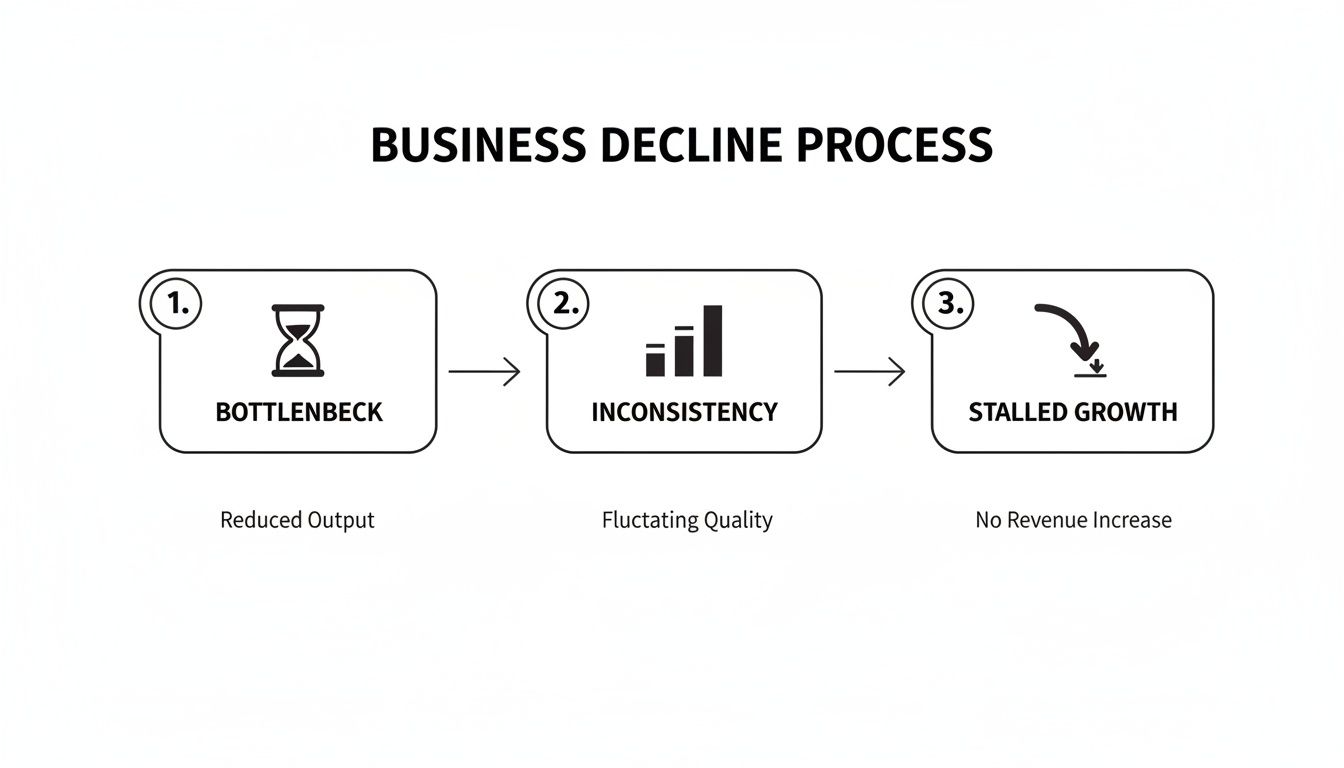
This visual makes it crystal clear how one point of failure can seriously limit your company's ability to scale.
Step 3 Automate Documentation With AI Powered Tools
This is where the real magic happens. Pairing screen recording with automation is the key. The friction of manually transcribing a video and taking all the screenshots is where most documentation projects fall apart. Tools like Build a Guide completely remove that friction.
Here’s how it works:
You record your screen while you do the process.
You upload that recording.
The AI gets to work, automatically breaking the video down into a perfect step-by-step guide with screenshots, annotations, and written instructions.
This turns a job that used to take hours into something that takes just a few minutes. It captures the expert's knowledge perfectly, creating a clean, professional document that’s ready for the next step.
Step 4 Refine And Review For Absolute Clarity
The AI-generated draft is your starting point, not the final product. The next step is absolutely crucial: refining the guide so it’s perfectly clear to someone with zero context.
During this stage, the original expert (or a designated editor) should jump in to:
Add context and notes: Explain the "why" behind certain steps. A simple callout like, "Make sure you select 'Advanced Options' here to avoid sending the client an unnecessary notification," can save someone a lot of trouble.
Clarify ambiguous language: Tweak the auto-generated text to match your company's own terminology and tone.
Incorporate checklists and warnings: Use formatting to highlight critical decision points or add simple checklists for tasks with multiple parts.
A great SOP is about transferring understanding, not just information. It should give a new user the confidence to do the task as well as your most seasoned expert.
Step 5 Publish Share And Iterate Your New SOPs
Finally, a documented process is useless if nobody can find it. A guide saved on someone’s desktop is no better than knowledge stuck in their head.
Publish your new guide to a central, cloud-based spot where your whole team can get to it. Modern platforms let you share guides with a simple link, making them perfect for onboarding, training, or just-in-time support. For a deeper dive, check out our piece on how to create a step-by-step guide that your team will actually want to use.
And remember, SOPs are living documents. They're not meant to be written once and forgotten. As your tools and processes change, your guides have to be updated right alongside them. This is what truly replaces fragile tribal knowledge with a resilient system that can support real, sustainable growth.
Selecting The Right Tools For Your SOP Library
Once you have a plan for capturing all that tribal knowledge, the next big step is picking the right tools.
This is a critical decision. The tech you choose will either turn your SOPs into a living, breathing asset for your team or just another folder of static documents nobody ever opens.
Think about the "old way" of doing this: taking screenshots one by one and pasting them into a Word document. It’s so slow and tedious that it practically guarantees your guides will be outdated the moment you finish them. The process is so painful it actively discourages people from documenting anything at all.
Modern tools completely flip that dynamic. They’re built for speed, clarity, and collaboration, turning the chore of documentation into a fast, almost effortless task. That shift is the key to making your knowledge base sustainable.
The Old Way vs. The New Way
Let's be clear about the contrast here. The old, manual way is a grind that just can't keep up with how fast businesses move today. It’s a relic from a time before agile workflows and cloud-based tools became standard.
The new way embraces automation and interactivity. It’s built for how teams actually work, making knowledge sharing a natural part of the workflow instead of a separate, dreaded task. This approach is what turns fragile tribal knowledge into a solid operational backbone for your company.
The difference is stark:
Old Way: Manual screenshots, huge blocks of text, and version-control chaos with files saved all over the place.
New Way: Automated screen capture, AI-driven text generation, and a central, cloud-based library that’s always up-to-date.
Essential Features For A Modern SOP Platform
When you’re looking at different tools, don’t just look for a place to store text. You need a dynamic system that makes creating, sharing, and maintaining knowledge incredibly simple.
The real goal is to lower the barrier to entry so much that anyone on your team can easily share what they know without it feeling like a project.
Here are the core features to look for:
AI-Powered Content Generation: The best tools can take a simple screen recording and automatically turn it into a complete step-by-step guide with screenshots and written instructions. This one feature can shrink the time it takes to create a guide from hours down to just a few minutes.
Integrated Screen Recording: Being able to record a process right inside the tool is a game-changer. An expert can just do their task like they normally would, and the platform does the heavy lifting of capturing every click and action. No friction.
Rich-Text Editing and Collaboration: An auto-generated guide is a great starting point, but you’ll always need to refine it. Look for tools that allow for real-time editing, comments, and the ability to add things like callouts, checklists, and warnings to give your steps crucial context.
When building your SOP library, selecting the right tools is paramount. Beyond traditional documentation software, consider exploring the functionality of various AI-powered solutions like these top audio to text converters to efficiently transcribe verbal knowledge and integrate it into your formal processes.
A great tool doesn't just store information; it accelerates the transfer of understanding. It empowers your experts to share what they know without slowing them down.
Choosing a platform with these features isn’t just about convenience—it’s about building a system that can actually scale with your company. When documentation is fast and easy, your team is far more likely to do it consistently.
If you want to dive deeper into your options, our guide on process documentation tools offers a more detailed comparison. This is how you create a truly living library that grows right alongside your business.
Turn Fragile Knowledge Into A Growth Engine
When you finally get a handle on what tribal knowledge is and its hidden costs, something fundamental shifts. Your business moves from a state of constant, low-level risk to one of genuine resilience. Capturing this unwritten expertise isn’t just a defensive move to prevent chaos when a key person leaves—it's about building a predictable foundation for real growth.
This is the difference between running on memory and luck versus running on a reliable, documented system.
Think about what your business looks like with that foundation in place. New hires aren't left stranded for weeks, fumbling their way through tasks. They have clear, visual guides that help them become productive in record time. Your customer experience is no longer a lottery based on who answers the phone; it's consistently excellent, building trust with every single interaction.
Empowered Teams And Frictionless Scaling
When processes are actually documented and easy to find, your team is empowered. They don't have to constantly interrupt your experts for simple questions anymore. This frees up your most experienced people to focus on innovation and solving high-value problems instead of getting stuck in a loop of repetitive training.
This is how you unlock true scalability.
With a living library of SOPs, you can expand operations, onboard new team members, and even enter new markets without the usual friction and chaos. Your processes become a strategic asset that grows with you, not a bottleneck that holds you back. For a deeper dive into building this kind of system, check out these knowledge management best practices.
The ultimate goal is to transform your team’s hidden genius from a fragile, person-dependent risk into a documented, strategic advantage that anyone can access and build upon.
The journey from spotting tribal knowledge to building a living library of SOPs is a powerful one. It’s a deliberate choice to build a more efficient, resilient, and scalable organization. The first step is deciding to turn your team’s most valuable hidden knowledge into your greatest engine for growth.
Frequently Asked Questions
Even with a solid plan, a few questions always pop up once you start digging into your company's tribal knowledge. Let's tackle the common ones so you can move forward without getting stuck.
How Do I Convince Experts To Share Their Knowledge?
Getting your most seasoned employees on board is everything. This is where most documentation efforts fall apart.
Many experts see documentation as a threat—a way to make them replaceable. The key is to flip that script entirely. Frame this project not as a way to replace them, but as a way to elevate their role.
When they share what they know, they stop being the only person who can do a task and become a mentor and strategist. This frees them from answering the same questions over and over, letting them focus on bigger things—like making the processes they just documented even better.
What’s The Difference Between Tribal Knowledge And Company Culture?
This is a really common point of confusion, but the distinction is simple.
Think of it like this:
Company Culture is the why and the who. It’s your shared values, beliefs, and how you communicate. It’s the vibe of the company and the principles that guide your big decisions.
Tribal Knowledge is the how. It’s the unwritten playbook of shortcuts, workarounds, and informal steps people use to get specific tasks done. It’s the practical stuff that keeps the gears turning.
In short, culture defines how your team behaves, while tribal knowledge dictates how they actually get the work done. One is about values; the other is about action.
How Often Should We Update Our SOPs?
Your Standard Operating Procedures should never be digital dust collectors. They need to be living guides that change right alongside your business.
The rule is simple: if a process, tool, or policy changes, the SOP gets updated. Immediately.
A good baseline is to schedule a formal review of your most important SOPs every quarter or two. But the real magic happens when you build a culture where the person doing the work feels empowered to flag an update the second they notice something’s off. Modern tools make this easy, allowing for quick edits that keep your entire knowledge base accurate.
Ready to turn your team's hidden expertise into a powerful asset? Build a Guide makes it simple. Our platform uses AI to automatically turn your screen recordings into clear, step-by-step guides, so you can build a living SOP library in a fraction of the time. Start capturing your tribal knowledge today.